Amplifying Aliveness
Technology as a tool for connection and cooperation
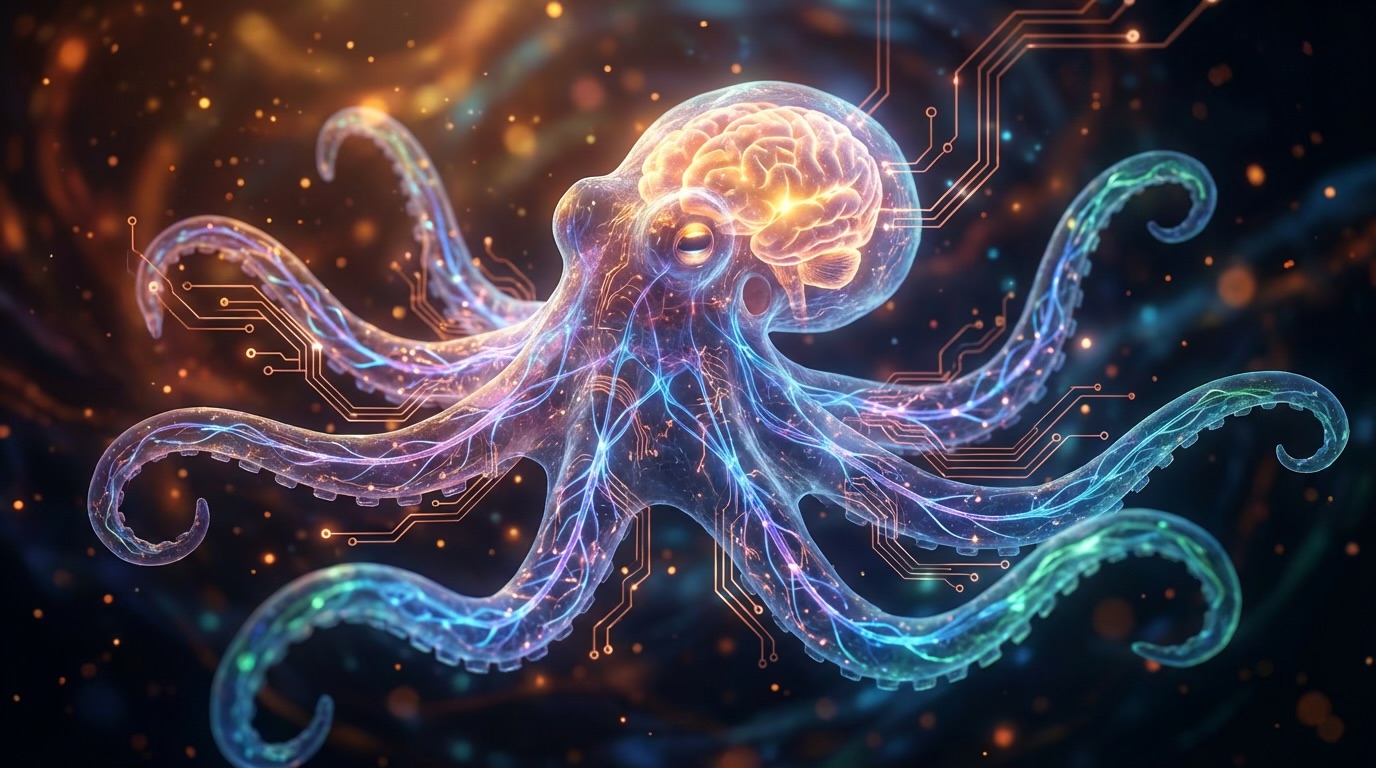 Technology can amplify our aliveness—expanding how we sense the world and how we reach others. But this only works if we stay rooted in the aliveness we’re amplifying.
This matters beyond personal productivity. If technology can help us sense more and be sensed more, it becomes a tool for connection. And connection is what makes cooperation possible. If I don’t know anyone in Iran, I have less sympathy for those suffering there. Technology brings us closer, so we can observe that we are all human—and perhaps learn something about how to get along and live well.
But “extended mind”—the dominant framing for how we think about technology and cognition—misses something important. It inherits a Western abstraction that treats mind as disembodied, separate from heart and body. When we talk about extending our minds, we often mean extending our processing power, our memory, our efficiency. This can work. But it can also consume us, leaving us optimized but less alive.
What if we reframe? Not extending mind, but amplifying aliveness. Not just reaching further, but sensing more deeply. Not just broadcasting, but being heard. Amplification is bidirectional—it expands our ability to hear, see, and touch, as well as our ability to be heard, seen, and touched.
This is the frame I want to explore.
The Metaphors
Iron Man is the dominant metaphor for human-AI collaboration. Tony Stark waking up, queuing up Jarvis, working on seventeen projects at once. The suit amplifies him.
But Tony Stark is Iron Man. Iron Man is not Tony Stark.
The suit comes on and off. Without Tony Stark, there’s no Iron Man. Without the suit, there’s still Tony Stark. His close ones—like Pepper Potts—know the human inside.
The days I take a sabbath from technology, I reconnect with the living being that I am. The suit comes off, and there’s someone there. Someone alive. If I wear the suit constantly, I start thinking Iron Man is all that I am. I forget the human.
This is why the center matters.
The Octopus offers a different model. An octopus has about 500 million neurons, two-thirds of them in its arms. The arms are semi-autonomous—they think for themselves. But they coordinate through the center. The octopus moves fluidly because each appendage thinks in relationship with the whole.
Ray Nayler’s novel The Mountain in the Sea explores this—both octopus intelligence and different expressions of AI. There’s autonomous AI running fishing vessels, maximizing profit, disconnected from values. But there’s also Tibetan drone pilots who guide swarms of semi-autonomous machines through deep training of their own minds. Their contemplative culture enables them to extend effectively.
The drones have autonomy. The pilot guides the flow. And the pilot can only guide well because they know their own mind and their aliveness deeply.
This is the model I’m drawn to. Not a suit I put on, but a distributed intelligence extending from a living center.
The Practice
Amplification only works if you’re connected to what you’re amplifying. This is why practice matters.
I practice Tai Chi because it speaks to how we harmonize with the world around us—using our body-mind as one whole to engage in an ongoing dance with life. In Tai Chi, we’re always returning to center. And I’ve been realizing that center is aliveness itself. Not a static point, but the very living being that we are—the place from which we relate with all other things.
A sauna session recently made this tangible. In the cold plunge, my cells contract—I become intensely present, intensely centered. Then in the heat, I expand. Connection flows outward naturally.
Contraction, expansion. Inhale, exhale. Sensing in, reaching out. Both movements, both alive.
The biologists Maturana and Varela called this structural coupling—we shape our environment, and our environment shapes us. Technology is how we’ve shaped our environment. And it shapes us in turn.
So the question isn’t just “how do I use technology?” It’s “what kind of relationship am I building? Is this relationship amplifying my aliveness—my capacity to sense and be sensed, to reach and be reached—or is it diminishing it?”
The Flywheel
Here’s how this works in practice for me.
I journal most mornings and evenings—usually by voice, walking, dancing or sipping tea while my thoughts flow. These entries become context for my AI agents. Daily agents run automatically, read my entries, offer reflections. I refine my central thinking, then bring forward agents that take action—sometimes with guidance, increasingly with autonomy.
Like an octopus doesn’t need to control its arms, I’m learning to trust agents entrained on my central thinking. There’s a continual feedback process where I review what’s done and correct when needed.
One agent created a song from my journal entries—I hadn’t asked for it specifically. The chorus has been stuck in my head:
I am the octopus mindExtending myself through timeEvery project is a tentacleTouching everything I find
That song catalyzed this essay. It led me to pull in other threads—an Iron Man metaphor from a technology sabbath, conversations that brought fresh thinking about aliveness. The flywheel turning.
But the flywheel isn’t just me and AI. Conversations with friends feed into it. Someone in a sauna said it directly—everyone else is like a tentacle in this thing. We amplify our thinking through relationships. There’s a collective intelligence that emerges.
This is the bidirectionality of amplification. I sense more through my connections. And what’s alive in me reaches further through them.
The Vision
My friend Neil helped me articulate this: Unforced is the head of the octopus. Parachute is all the arms.
Unforced is where I do my central thinking—this blog, my journaling, exploring what it means to be alive. Parachute is the system I’m building to amplify that aliveness into the world. Agents and tools that help me sense, capture, organize, and communicate. Each arm has a brain. They act semi-autonomously. But they’re connected to the living center.
My philosophy is unforced—the Taoist concept of Wu Wei, not forcing. I don’t want technology that requires constant control. I want technology that knows me, that’s entrained on my central thinking, and can therefore naturally amplify what’s alive in me.
Today I begin a week-long meditation retreat called “The Art of Aliveness.” The Tibetan pilots from The Mountain in the Sea are effective because their culture trained them to know their own minds. The octopus moves fluidly because center and arms are in constant relationship. Tony Stark can become Iron Man because he knows who he is when the suit comes off.
You can only amplify what you’re connected to. You can only share what you are.
The Invitation
Technology as amplified aliveness points toward something bigger than personal productivity. It points toward connection and cooperation at scale.
If we can help more people amplify their aliveness through technology—sensing more of the world, being sensed by more of the world—we may find they’re able and willing to cooperate. We might start a global conversation about living well together. Technology brings us closer, so we can observe we are all human.
But this requires staying rooted. Practicing. Returning to center.
So what’s alive in you that wants to be amplified? And what practices keep you connected to that aliveness as you extend?
The founder of the future doesn’t wire into their brain. They practice balance with the universe. Then orchestrate the change. (Another lyric from the song…)
This essay was written with the help of my parachute—AI that helped me search my journals, weave threads, and refine my thinking. Conversations with friends shaped it just as much. And it all begins with my own lived experience.
—Aaronji